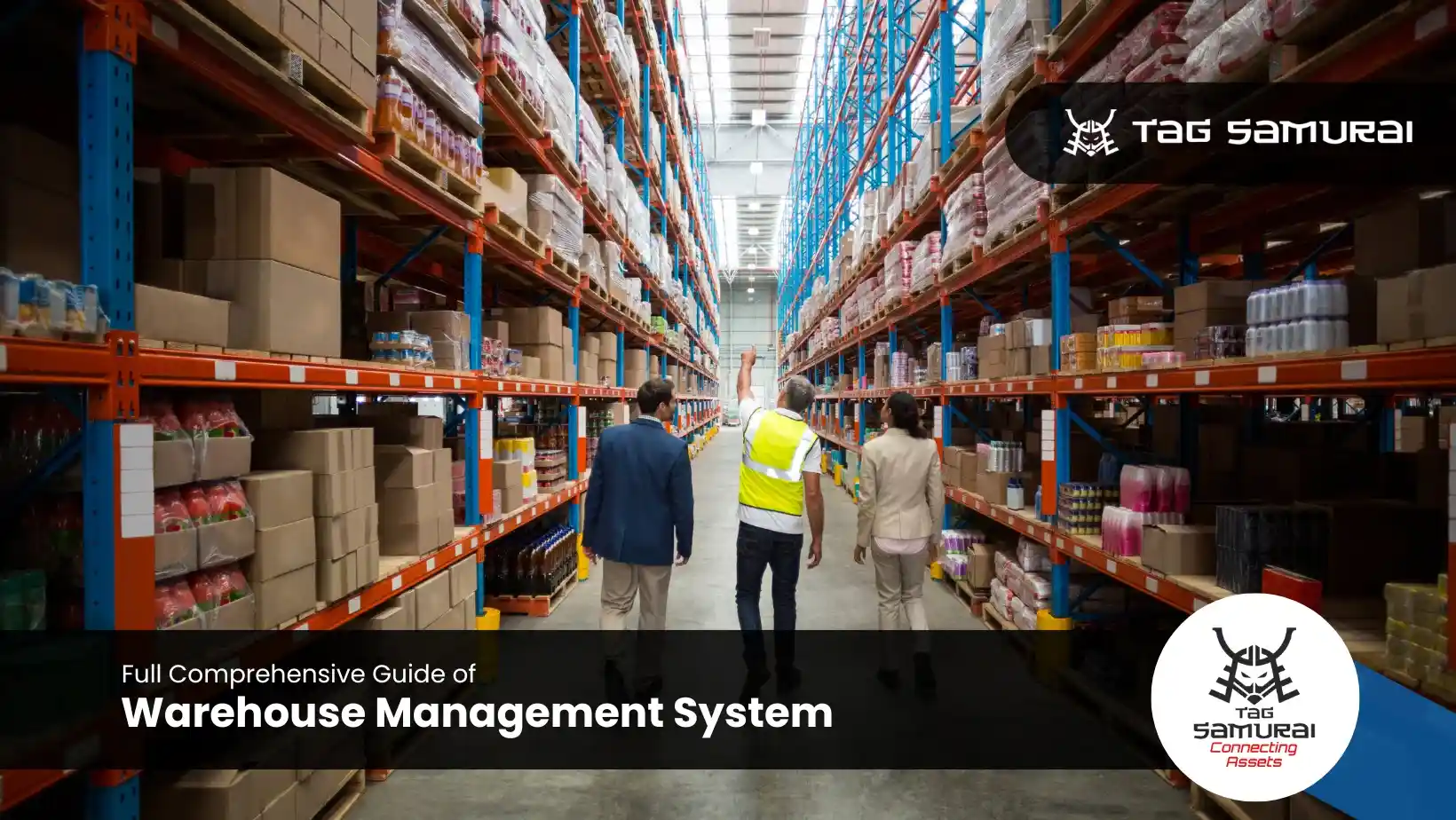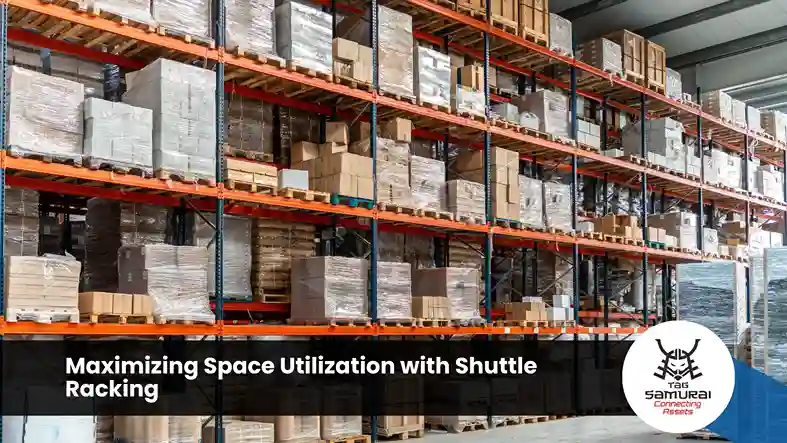
In the competitive landscape of 2026, the warehouse is no longer just a storage room. It is a high-cost asset. You must optimize it for every square inch. Industrial real estate prices continue to climb while demand for rapid delivery increases. Because of this, businesses are facing a critical “space crunch.”
Expanding a warehouse’s physical footprint is often too expensive. Sometimes, it is geographically impossible. This reality forces supply chain leaders to look upward and inward. They are seeking new ways to store more products within their existing walls.
Enter Radio Shuttle Racking, a high-density storage revolution. This technology is redefining how modern enterprises manage their footprints. Unlike traditional systems, shuttle racking does not need wide forklift aisles. Instead, it uses semi-automated “shuttles” to move pallets through deep lanes. By removing wasted aisle space, you can increase storage capacity without moving to a larger facility.
How Shuttle Racking Systems Work
To understand why shuttle racking is a game-changer for space utilization, one must look at the mechanics behind the “shuttle” itself. In a standard selective racking setup, forklifts must enter every aisle to retrieve a single pallet. This requires significant floor space dedicated solely to vehicle movement rather than storage.
A Radio Shuttle Racking System changes this dynamic by introducing a semi-automated, battery-powered platform that travels on rails inside the storage lanes. Here is the typical operational flow:
- Placement: A standard forklift places the shuttle into the desired lane of the rack
- Loading: The forklift then places a pallet onto the shuttle at the “entry” of the lane
- Transport: Using a remote control or integration with a Warehouse Management System (WMS), the operator commands the shuttle to lift the pallet and carry it deep into the rack
- Positioning: The shuttle identifies the next available storage position using built-in sensors, deposits the pallet, and returns to the front to wait for the next load
Shuttle Racking vs Drive-In Racking
Many warehouse managers confuse shuttle racking with traditional Drive-In Racking. While both are “high-density,” the differences in execution are vast. In Drive-In systems, a forklift driver must physically drive into the rack structure, which is time-consuming and carries a high risk of collisions and rack damage.
In contrast, shuttle racking keeps the forklift outside the structure. The shuttle does the “dirty work” inside the deep lanes. This not only speeds up the loading and unloading times by up to 50% but also significantly reduces maintenance costs associated with rack repairs. Furthermore, because the shuttle is guided by precise sensors, it can store pallets with much tighter tolerances, allowing for more levels and deeper lanes sometimes up to 40 pallets deep in a single lane.
Strategic Advantages for Space Optimization
When we talk about “maximizing space,” we aren’t just talking about cramming more boxes into a room. It is about intelligent density. Shuttle racking transforms the cubic volume of your warehouse into a high-performance engine. By shifting from a horizontal-access mindset to a deep-lane storage mindset, businesses can see a radical shift in their storage metrics.
Vertical Expansion: Conquering the “Dead Air”
Most traditional warehouses only utilize about 60-70% of their vertical height due to the limitations of forklift mast reach and the stability requirements of standard racks. Shuttle racking systems are engineered for stability. Because the forklift remains at the face of the rack, the system can be built much higher, often reaching the very limit of the warehouse ceiling. This allows you to utilize the “dead air” that you are already paying for in rent or property taxes.
Aisle Reduction: Turning Concrete into Storage
In a conventional warehouse, aisles can take up to 50% of the total floor area. A shuttle racking system operates on a “block storage” principle. By consolidating multiple lanes into a single block, you eliminate the need for an aisle between every two rows of racks. This saved space can then be converted into more storage lanes. For many facilities, this transition alone increases storage capacity by 60% to 80% compared to selective racking.
Increased Throughput and Density
Density usually comes at the cost of speed, but not here. In a Stock Control environment, speed is essential. Because the shuttle travels at speeds of up to 1.1 meters per second while the forklift driver is already fetching the next pallet, the “travel time” within the rack is virtually eliminated for the human operator. You get the density of a cold-storage facility with the speed of a high-velocity distribution center.

Impact on Inventory Management Systems
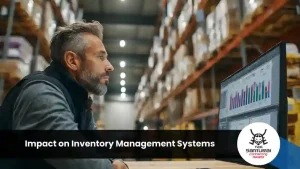
A physical upgrade to shuttle racking has a direct, positive ripple effect on your digital inventory data. In modern Inventory Planning, the physical and digital worlds must be perfectly synced.
Real-Time Accuracy
Integrating shuttle racking with a Perpetual Inventory system creates a seamless flow of data. Since the shuttle is an electronic device, it can communicate directly with your Warehouse Management System (WMS). Every time a pallet is moved deep into a lane, the system knows exactly where it is. This eliminates “lost pallets” and ensures your digital records are a true reflection of your physical reality.
Streamlining Physical Inventory Counts
One of the biggest headaches in logistics is the annual Physical Inventory count. In a messy, unorganized warehouse, this can take days. However, the organized, “lane-based” nature of shuttle racking makes auditing significantly faster. Planners can verify Stock Levels lane-by-lane with high confidence, as the system’s automated nature prevents the haphazard stacking that often leads to counting errors.
Supporting Periodic Inventory System Audits
Even if your business still uses a Periodic Inventory System, shuttle racking provides a cleaner framework for those scheduled counts. Because items are grouped by SKU in high-density lanes, the “snapshot” taken at the end of the period is much more accurate and easier to document than in a high-traffic, cluttered environment.
Enhancing Operational Flow & Stock Logic
High-density storage is only as good as the logic behind it. A common fear with deep-lane storage is the “LIFO trap,” where older stock gets buried behind new arrivals. However, the versatility of a shuttle racking system actually enhances your operational flow by offering unparalleled flexibility in how you handle Stock Control.
FIFO vs LIFO: The Ultimate Versatility
Unlike many high-density systems that lock you into one methodology, shuttle racking can be configured for both:
- LIFO (Last-In, First-Out): Ideal for non-perishable goods or high-volume items where the specific age of the pallet isn’t critical. The shuttle loads and unloads from the same face.
- FIFO (First-In, First-Out): Essential for perishables, pharmaceuticals, or any goods with expiration dates. By using a “tunnel” configuration loading at one end and unloading at the other—you ensure that the oldest stock is always picked first. This level of control is vital for maintaining healthy Stock Levels without the risk of product expiration or obsolescence.
Reducing Product Damage and “Hidden” Waste
In traditional warehouses, up to 10% of inventory loss is caused by “forklift rash” accidental damage while navigating narrow aisles or deep racks. Because the shuttle carries the pallet with computer-controlled precision, the risk of dropping or crushing goods is virtually eliminated. This protects your inventory integrity and ensures that when your Perpetual Inventory system says you have 100 units, all 100 are actually in “sellable” condition.
Optimizing the “Picking Face”
Inventory planners often struggle with replenishment delays. Shuttle racking can be programmed to perform a “shuffle” or “compacting” function. During downtime, the shuttle can automatically move all pallets to the front of the lane. This ensures that when the morning shift starts, the Stock Levels at the picking face are maximized, allowing for faster dispatch and higher fulfillment rates.
Cost-Benefit Analysis: ROI of Automation
Investing in a Shuttle Racking System is a significant capital expenditure, but for a forward-thinking enterprise, the Return on Investment (ROI) is often realized much faster than expected. When evaluating the costs, one must look beyond the initial price tag and consider the long-term operational savings.
Direct Savings in Real Estate and Utilities
The most immediate financial impact comes from deferred expansion. If you can increase your storage capacity by 80% within your existing walls, you effectively eliminate the need to rent or build additional warehouse space. Furthermore, high-density storage is more energy-efficient. In temperature-controlled environments (like cold storage), cooling a compact block of shuttle racking is significantly cheaper than cooling a massive space filled with empty aisles.
Labor Efficiency and Throughput
In a traditional setup, forklift drivers spend up to 70% of their time traveling between locations. With shuttle racking, that travel time is slashed. While the shuttle is moving a pallet deep into a lane, the driver is already fetching the next one or loading a truck. This allows you to handle higher volumes with fewer staff members, reducing labor costs and minimizing the risk of workplace accidents.
Lower Maintenance Costs
Because forklifts no longer enter the racking structure, “rack impact” damage is almost entirely eliminated. In many high-volume warehouses, rack repair is a constant, recurring expense. By keeping the heavy machinery outside the storage lanes, you extend the lifespan of your racking infrastructure and reduce emergency maintenance fees.
Implementation Challenges & Solutions

While the benefits are clear, transitioning to an automated system requires careful Inventory Planning. It is not a “plug-and-play” solution; it requires technical precision.
- Floor Flatness: Shuttle systems require extremely level floors to operate at peak speed and safety. If your warehouse floor is uneven, it may require grinding or leveling before installation.
- Battery Management: Since shuttles are battery-powered, your team must implement a disciplined charging schedule. Modern systems often use lithium-ion batteries with “fast-charge” capabilities to minimize downtime.
- SKU Profiling: Shuttle racking is most efficient for “medium to low” SKU variety with “high” volume per SKU. If your business deals with thousands of unique items with only one or two pallets each, a selective racking system might still be necessary for a portion of your warehouse.
FAQ
Is shuttle racking compatible with all types of pallets?
Most shuttle systems are designed to handle standard industrial pallets, such as Euro, GMA, or stringer pallets. However, the pallet base must be in good condition and made of a material sturdy enough for the shuttle’s lifting mechanism to engage safely.
Can shuttle racking operate in cold storage or deep-freeze environments?
Yes, this is one of its most popular applications. Shuttle racking is highly efficient in cold storage (down to -30°C) because it maximizes expensive refrigerated space and reduces the number of human operators and forklifts needed in harsh, sub-zero temperatures.
What is the main difference between LIFO and FIFO in shuttle racking?
In a LIFO (Last-In, First-Out) setup, the shuttle loads and unloads from the same side of the rack. In a FIFO (First-In, First-Out) setup, also known as a “shuttle tunnel,” goods are loaded from one side and retrieved from the opposite side, ensuring the oldest stock is used first.
Conclusion
Maximizing space with shuttle racking is more than a storage upgrade. It is a strategic move toward a smarter, more resilient supply chain. By combining automated racking with the precision of Perpetual Inventory and robust Stock Control, you create a future-ready warehouse. This system keeps your Stock Levels optimized. It also reduces the need for costly expansions and minimizes operational waste.
As we have explored, semi-automated technology transforms your warehouse into a dynamic engine of growth. Deep-lane storage protects your inventory and improves labor safety. It ensures every cubic meter of your facility generates maximum ROI. In the long run, businesses that embrace these strategies will win. They will maintain higher fulfillment rates and stronger customer loyalty in a crowded marketplace.
Elevate Your Warehouse Strategy with Tag Samurai

To truly benefit from high-density storage, you need a software ecosystem that keeps pace with automation. TAG Samurai Inventory Management provides the real-time visibility and analytics you need to manage complex warehouses. From tracking pallet movements to streamlining Physical Inventory audits, our platform ensures your data and physical assets work in perfect harmony.

- First in First Out: Why This Queuing Matters - 04/05/2023
- The Importance of Safety Stock for Inventory Systems - 02/05/2023
- how should stock be stored for Maximum Efficiency - 01/05/2023