
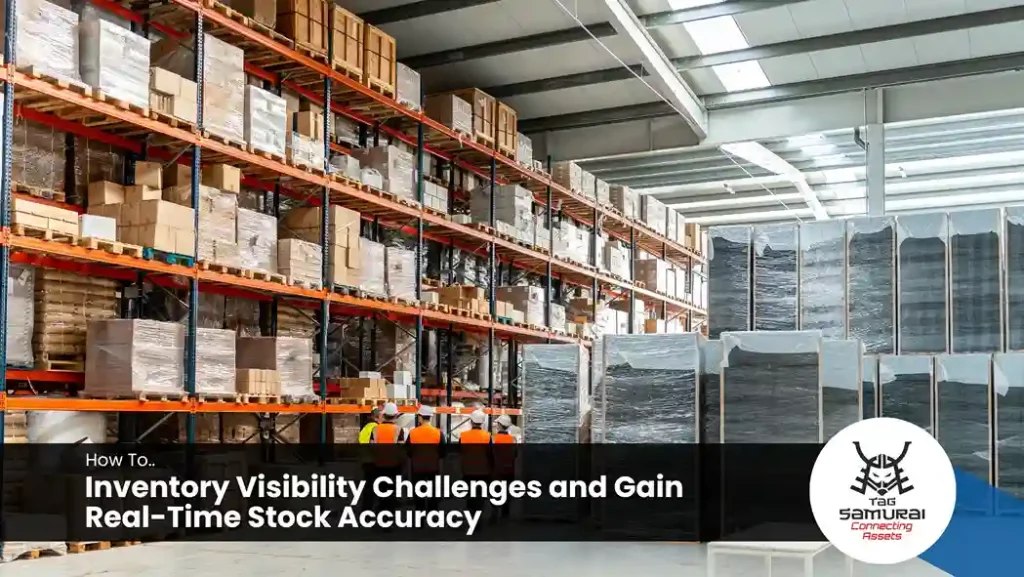
In today’s fast-moving business environment, inventory is no longer just a back-office concern. It plays a critical role in customer satisfaction, operational efficiency, and financial performance. Yet, many organizations still struggle with Inventory Visibility Challenges a problem that silently drains profits, disrupts supply chains, and erodes trust with customers.
Inventory visibility refers to the ability to track stock levels, movements, and availability accurately across all locations in real time. When visibility is poor, businesses operate on assumptions rather than facts. This leads to stockouts, overstocking, delayed fulfillment, and inaccurate financial reporting.
This article explores the most common inventory visibility challenges, why they persist, and most importantly how businesses can overcome them to achieve real-time stock accuracy and sustainable growth.
What Are Inventory Visibility Challenges?

Inventory Visibility Challenges occur when a business cannot clearly or accurately see the status of its inventory across the supply chain. This includes raw materials, work-in-progress (WIP), and finished goods stored in warehouses, retail stores, or in transit.
These challenges are not limited to large enterprises. Small and mid-sized businesses often face even greater risks due to limited systems, manual processes, or fragmented data.
Common signs of poor inventory visibility include:
- Discrepancies between system records and physical stock
- Frequent stockouts or emergency replenishments
- Excess inventory that ties up working capital
- Delayed order fulfillment
- Difficulty forecasting demand accurately
Without clear visibility, inventory management becomes reactive instead of strategic.
Why Inventory Visibility Matters More Than Ever
Modern supply chains are more complex than ever before. Businesses now operate across multiple sales channels online, offline, marketplaces, and distributors often supported by multiple warehouses and third-party logistics providers.
At the same time, customers expect:
- Real-time product availability
- Faster delivery times
- Accurate order fulfillment
Failing to meet these expectations due to inventory inaccuracies directly impacts revenue and brand reputation.
Strong inventory visibility enables businesses to:
- Respond quickly to demand fluctuations
- Reduce carrying and holding costs
- Improve service levels
- Make data-driven decisions
- Support scalable growth
In short, inventory visibility is no longer optional it is a competitive necessity.
Also Read: Buffer Inventory vs Safety Stock: What’s the Difference and When to Use Each
The Most Common Inventory Visibility Challenges
Understanding the root causes is the first step toward solving them. Below are the most common inventory visibility challenges faced by businesses today.
Siloed Systems and Disconnected Data
Many organizations rely on separate systems for purchasing, warehousing, sales, and accounting. When these systems do not communicate effectively, inventory data becomes fragmented.
For example:
- Sales systems show stock available
- Warehouse systems show stock on hand
- Accounting systems show stock value
When these numbers do not align, decision-making becomes unreliable.
Manual Processes and Spreadsheet Dependency
Manual data entry using spreadsheets increases the risk of:
- Human error
- Delayed updates
- Duplicate records
While spreadsheets may work in early stages, they quickly become a bottleneck as transaction volumes grow.
Lack of Real-Time Updates
Inventory data that updates once per day or worse, once per week cannot support modern operational needs. Delayed visibility leads to overselling, missed replenishment opportunities, and inaccurate forecasting.
Inaccurate Stock Counts
Physical inventory often differs from system records due to:
- Shrinkage or theft
- Damaged or expired goods
- Misplaced stock
- Unrecorded adjustments
Without regular reconciliation, these inaccuracies compound over time.
Multi-Location Complexity
Businesses operating multiple warehouses, retail outlets, or fulfillment centers face additional challenges:
- Stock transfers not recorded correctly
- Inconsistent processes across locations
- Limited central oversight
This complexity makes it difficult to know exactly where inventory is located at any given time.
Poor Integration with Suppliers and Logistics Partners
When supplier deliveries, lead times, and in-transit inventory are not visible, planning becomes guesswork. This often results in safety stock inflation or frequent stockouts.
Also Read: Understock: Definition, Causes, How to Avoid it
The Business Impact of Poor Inventory Visibility

Inventory visibility challenges have direct and measurable consequences across the organization.
Financial Impact
- Excess inventory increases holding costs
- Stockouts result in lost sales
- Inaccurate valuation affects financial reporting
Operational Impact
- Inefficient warehouse operations
- Emergency procurement and expedited shipping
- Increased workload for inventory reconciliation
Customer Impact
- Delayed or canceled orders
- Inconsistent product availability
- Reduced trust and satisfaction
Over time, these issues reduce competitiveness and limit scalability.
How to Overcome Inventory Visibility Challenges

Solving inventory visibility challenges requires a combination of technology, process improvement, and organizational discipline. Below are proven strategies businesses can implement.
Centralize Inventory Data
The foundation of inventory visibility is a single source of truth.
By centralizing inventory data across all locations and channels, businesses can:
- Eliminate conflicting records
- Improve coordination between teams
- Enable accurate reporting
A centralized inventory management system ensures that every transaction sales, purchases, transfers, and adjustments updates stock levels consistently.
Implement Real-Time Inventory Tracking
Real-time inventory tracking ensures that stock levels update instantly as transactions occur.
This allows businesses to:
- Prevent overselling
- React quickly to demand changes
- Improve order fulfillment accuracy
Technologies such as barcode scanning, RFID, and cloud-based inventory platforms play a key role in enabling real-time updates.
Standardize Inventory Processes
Inconsistent procedures are a major cause of visibility issues.
Best practices include:
- Standard receiving and put-away procedures
- Clear rules for stock transfers
- Defined processes for adjustments and returns
Standardization reduces errors and ensures data accuracy across all locations.
Conduct Regular Cycle Counts
Instead of relying solely on annual stock counts, businesses should implement cycle counting.
Cycle counting:
- Identifies discrepancies early
- Reduces operational disruption
- Improves long-term accuracy
High-value or fast-moving items should be counted more frequently.
Integrate Inventory with Sales and Purchasing
Inventory does not operate in isolation. Integration with sales, purchasing, and production systems ensures that inventory decisions are aligned with real demand.
Benefits include:
- Better demand forecasting
- Automated replenishment
- Reduced manual coordination
Integration transforms inventory from a reactive function into a strategic asset.
Improve Supplier and Logistics Visibility
Visibility should extend beyond internal operations.
By tracking:
- Supplier lead times
- Inbound shipments
- In-transit inventory
Businesses can plan more accurately and reduce uncertainty. This is especially important for companies with global supply chains.
Use Inventory Analytics and Reporting
Raw data alone is not enough. Businesses need insights.
Inventory analytics can help:
- Identify slow-moving and obsolete stock
- Optimize reorder points
- Improve inventory turnover
Data-driven decisions lead to continuous improvement and cost optimization.
Also Read: The Advantages of RFID Warehouse Management
The Role of Technology in Real-Time Stock Accuracy
Technology is a critical enabler of inventory visibility.
Modern inventory management systems offer:
- Cloud-based access
- Real-time synchronization
- Automated alerts and reporting
- Integration with ERP, POS, and e-commerce platforms
When implemented correctly, technology reduces manual effort while improving accuracy and transparency.
Achieving Real-Time Stock Accuracy: Best Practices
To maintain accurate inventory over time, businesses should focus on these best practices:
- Ensure every inventory movement is recorded immediately
- Limit manual adjustments and require approval workflows
- Train staff on inventory procedures and system usage
- Monitor key inventory KPIs regularly
- Continuously review and improve processes
Real-time accuracy is not a one-time project it is an ongoing discipline.
Key Inventory Metrics to Monitor
Tracking the right metrics helps ensure visibility efforts are delivering results.
Important inventory KPIs include:
- Inventory accuracy rate
- Inventory turnover ratio
- Stockout rate
- Days inventory outstanding (DIO)
- Carrying cost of inventory
These metrics provide early warning signs of potential visibility issues.
Inventory Visibility as a Competitive Advantage
Businesses that overcome inventory visibility challenges gain a significant competitive edge.
They are able to:
- Fulfill orders faster
- Reduce costs
- Scale operations with confidence
- Respond quickly to market changes
In contrast, businesses with poor visibility remain trapped in reactive firefighting mode.
FAQ
What are Inventory Visibility Challenges?
Inventory Visibility Challenges refer to difficulties in accurately tracking inventory levels, locations, and movements across the supply chain in real time. These challenges often result from disconnected systems, manual processes, and delayed data updates.
Why is inventory visibility important for businesses?
Inventory visibility is critical because it helps businesses prevent stockouts, reduce excess inventory, improve order fulfillment, and make data-driven decisions. Without clear visibility, companies risk higher costs and poor customer satisfaction.
What causes poor inventory visibility?
Common causes include siloed systems, reliance on spreadsheets, lack of real-time tracking, inaccurate stock counts, and limited integration with suppliers or logistics partners.
How do Inventory Visibility Challenges affect customer satisfaction?
When inventory data is inaccurate, customers may experience delayed deliveries, canceled orders, or unavailable products. This reduces trust and negatively impacts the overall customer experience.
How can businesses improve inventory visibility?
Businesses can improve inventory visibility by centralizing inventory data, implementing real-time tracking systems, standardizing inventory processes, and conducting regular cycle counts.
What role does technology play in solving inventory visibility issues?
Technology enables real-time stock updates, system integration, automated reporting, and better data accuracy. Modern inventory management software significantly reduces manual errors and improves transparency.
Can small businesses face Inventory Visibility Challenges?
Yes. Small businesses often face inventory visibility challenges due to limited systems, manual tracking, or rapid growth. Implementing scalable inventory tools early helps prevent long-term issues.
What is real-time stock accuracy?
Real-time stock accuracy means inventory levels are updated instantly as transactions occur, ensuring system data matches physical stock at any given time.
How does real-time inventory visibility improve forecasting?
Accurate, real-time inventory data allows businesses to analyze demand patterns more effectively, optimize reorder points, and reduce uncertainty in planning.
What metrics indicate poor inventory visibility?
Key indicators include low inventory accuracy rates, frequent stockouts, high excess inventory, slow inventory turnover, and frequent manual stock adjustments.
Conclusion
Inventory Visibility Challenges are not just operational issues they have a direct impact on revenue, customer trust, and long-term business growth. When inventory data is inaccurate or delayed, companies face frequent stockouts, excess inventory, and inefficient workflows. By improving inventory visibility through centralized data, real-time tracking, standardized processes, and actionable analytics, businesses can gain full control over their stock and make smarter, faster decisions.

If you want to eliminate Inventory Visibility Challenges and achieve real-time stock accuracy, Tag Samurai is the right partner to support your journey. With Tag Samurai’s inventory management solutions, businesses can monitor stock in real time, streamline inventory operations, and gain complete visibility across all locations. Start optimizing your inventory today with Tag Samurai and turn accurate data into sustainable business growth.


