

In the high-stakes world of industrial operations, a resource is never just a stationary object. Instead, it is a dynamic entity that evolves through various complex phases. Organizations must master the asset lifecycle to manage these resources effectively. This lifecycle represents the end-to-end journey of an item. It starts from the moment a need is first recognized until the asset is formally retired from the balance sheet.
Furthermore, mastering this journey is not merely an administrative requirement. Rather, it is a core business strategy that dictates long-term profitability. Without a clear understanding of the lifecycle, companies often fall victim to “invisible drains.” These are hidden costs associated with underperforming equipment, redundant maintenance, and ghost assets.
Consequently, by taking a holistic view of this journey, businesses can refine their overall asset management. This ensures that every investment delivers maximum utility throughout its entire lifespan.
The Strategic Foundation of Lifecycle Management
Before an organization can manage a lifecycle, it must first establish a common language regarding its holdings. A fundamental starting point is defining what is an asset? and type of assets that the company relies on. This classification is crucial because the journey of a physical machine differs significantly from that of a digital software license.
At a broader level, the leadership team must be aligned on what is a company asset within their specific context. Is it a long-term revenue generator or a short-term operational tool? By clarifying these definitions early on, businesses can differentiate between resources that provide long-term economic benefits and those that are merely operational expenses. This clarity is the bedrock upon which all lifecycle strategies are built.
Strategic Acquisition and Planning
The journey begins long before a purchase order is signed. The Acquisition Stage is perhaps the most critical, as it dictates the potential ROI for the next 5 to 20 years.
Needs Identification and Gap Analysis
Every acquisition should stem from a documented need. Organizations must ask: Is this new purchase filling a capacity gap, or is it replacing an obsolete unit? In many cases, a deep dive into the current capital goods reveals that existing assets can be optimized rather than replaced. A strategic acquisition involves assessing available options, evaluating total cost of ownership (TCO), and selecting the most suitable asset that aligns with the organization’s growth trajectory.
Financial Valuation and Procurement Excellence
When procurement teams evaluate a new resource, they must look at the fixed asset to understand how it will be depreciated and insured. Factors such as initial cost, quality, functionality, and future maintenance requirements are paramount. By implementing best practices for asset acquisition, businesses ensure they don’t just “buy a machine,” but rather “invest in a solution” that provides long-term value and meets strict regulatory compliance.
Deployment and Integration

Once an asset is procured, it moves to the Deployment Stage. This is where the asset is physically or digitally integrated into the workflow.
Installation, Testing, and Optimization
Deployment includes physical installation, configuration, and rigorous testing. For physical assets them effectively, the integration must be seamless. If a production line is configured incorrectly during this stage, it will plague the maintenance team with recurring issues throughout its life.
Bridging the Physical and Digital Gap
A key part of deployment is “tagging.” To ensure 100% data integrity, every new item should be assigned a unique ID. This allows the asset to be placed correctly within the company’s asset management hierarchy, making it easy for managers to track which department owns the asset and which sub-systems it supports. Proper deployment ensures that assets are functioning as intended, thereby reducing immediate downtime and increasing initial productivity.
The Maintenance and Operations Stage
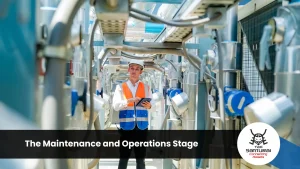
The Maintenance Stage is the longest phase of the lifecycle and typically the most expensive. This is where the asset’s integrity is tested daily through operational use.
Proactive vs. Reactive Management
Maintaining assets is about keeping them in “good working condition” to extend their useful life. Effective practices involve developing a rigorous schedule that includes inspections and preventive repairs. When organizations fail to maintain their equipment, they face a spike in asset downtime and how to calculate the resulting losses. Calculating the cost of an idle hour helps managers realize that preventive maintenance is almost always cheaper than a catastrophic failure.
Optimizing the Operational Workflow
During this stage, data is your best friend. By tracking every maintenance activity and lubrication cycle, businesses can identify trends. If a certain model of physical assets requires more frequent repairs than others, this data becomes vital for the next acquisition cycle. The goal here is simple: minimize downtime, ensure safety, and extend the lifespan of the asset to its maximum theoretical limit.
The Upgrade and Replacement Stage
No asset lasts forever. The Upgrade/Replacement Stage is triggered when an asset can no longer meet the business’s needs or when its maintenance costs become prohibitive.
Evaluating Technological Obsolescence
As technology marches forward, older capital goods may become “expensive dinosaurs.” They might still work, but they use more energy and produce less than modern alternatives. Regular assessments help identify these bottlenecks. A business must evaluate if an upgrade can breathe new life into an asset or if a full replacement is the only way to remain competitive.
Strategic Decision Making
This phase involves a thorough evaluation of available options. It’s not just about the price of the new machine; it’s about the “opportunity cost” of keeping the old one. If an aging fixed asset is prone to failure, the risk of a major production halt might justify an early replacement. This decision-making process ensures that the company’s asset portfolio remains relevant and high-performing.
The Disposal Stage
The final stage is Disposal. How an organization retires an asset says a lot about its corporate responsibility and operational discipline.
Identifying Assets for Retirement
When an asset has reached the end of its useful life or is no longer needed, it must be disposed of. This involves identifying the specific unit, assessing its residual value, and selecting the most suitable method of removal. Whether it’s through resale, trade-in, or recycling, the goal is to maximize the final value recovered from the asset.
Compliance, Legal, and Data Security
Disposal carries significant risks, particularly for IT assets. Organizations must consider environmental impact, legal requirements, and data security. By following best practices for disposal, businesses minimize the risk of data breaches and ensure they comply with e-waste regulations. Furthermore, properly de-registering a fixed asset ensures that insurance premiums and taxes are adjusted accordingly, preventing further financial leakage.
Implementing Lifecycle Asset Management Strategies
To truly master the journey, organizations must integrate these stages into a unified lifecycle asset management strategy. This is not a task for a single department; it requires a cross-functional approach.
Developing a Comprehensive Plan
A working plan covers everything from how you identify a need to how you scrap a machine. It should be a living document that is regularly reviewed. By utilizing data and analytics, managers can track performance trends across the entire asset lifecycle, identifying which brands or models offer the lowest total cost of ownership over time.
Training and Organizational Culture
Asset management is a human endeavor. Investing in training for the employees who operate and maintain these resources is vital. When everyone understands the “why” behind the maintenance schedule or the “how” of the audit process, the entire system runs more efficiently. Establishing clear workflows for each stage ensures that no asset “falls through the cracks” of the organizational structure.
The Role of Digital Transformation

In the modern era, managing the lifecycle of thousands of assets via spreadsheets is a recipe for disaster. This is where enterprise asset management (EAM) software becomes indispensable.
Real-time Tracking and Visibility
Modern software provides a “Digital Twin” of the asset’s physical journey. It automates depreciation calculations, sends alerts for upcoming maintenance, and provides a central repository for all documentation. This level of visibility is essential for conducting an asset audit, as it provides a clear trail of evidence from the moment of acquisition to the current day.
Enhancing Economic Impact
When you have a digital record of every lifecycle stage, you can better understand the economic impact of your capital goods. You can see exactly which assets are profitable and which ones are “money pits.” This data-driven approach allows for smarter budgeting and more accurate financial forecasting, ultimately leading to a more resilient business model.
FAQ
How does the lifecycle impact the “Fixed Asset” status in accounting?
The stage of the lifecycle determines how the asset is treated on the balance sheet. For instance, during the maintenance phase, the asset’s value is gradually reduced through depreciation, which must be accurately recorded to reflect its current worth.
Can an asset skip a lifecycle stage?
Technically, yes. For example, a poorly planned asset might go from deployment straight to disposal if it fails testing. However, to maximize ROI, every asset should ideally spend the majority of its life in the “Maintenance and Operations” stage.
What is the most common mistake in lifecycle management?
The most common mistake is neglecting the “Disposal” stage. Many companies keep “ghost assets” on their books for years, paying insurance and taxes on items they no longer own or use.
How do Capital Goods differ in their lifecycle? Capital Goods
often have longer maintenance stages and more frequent upgrade cycles because they are directly responsible for the production of other goods. Their lifecycle is closely tied to the company’s production capacity.
How often should I review my lifecycle strategy?
It is recommended to review your strategy annually or whenever there is a significant change in technology or business scale to ensure your asset management process remains optimized.
Conclusion
The Asset Lifecycle is a continuous loop of value creation. Every stage, from the initial acquisition of a fixed asset to its final disposal, presents an opportunity to either save money or drive growth. By understanding this journey in its entirety, businesses can move away from reactive management and toward a proactive, strategic approach.
Effective management throughout the lifecycle reduces waste, improves operational safety, and ensures that the company is always utilizing its resources to their fullest potential. It is the definitive way to ensure that your physical assets remain an advantage rather than a liability.
Ready to Optimize Your Asset Lifecycle?
Stop losing money on inefficient tracking and unplanned downtime. TAG Samurai Inventory Management offers a comprehensive platform designed to manage every phase of your asset’s journey. From automated tagging during deployment to predictive maintenance alerts and streamlined disposal tracking, we give you the visibility you need to succeed.


- First in First Out: Why This Queuing Matters - 04/05/2023
- The Importance of Safety Stock for Inventory Systems - 02/05/2023
- how should stock be stored for Maximum Efficiency - 01/05/2023

