
Barcode Asset Tracking
Choosing the right asset tracking method can make or break your operational efficiency. Many businesses still rely on barcode systems, while others have begun shifting toward RFID for faster, automated tracking. But which technology actually fits your business needs?
This guide breaks down barcode asset tracking vs RFID using real-world examples, performance differences, cost factors, and expert recommendations—so you can confidently choose the best system for accuracy, speed, and scalability.
Understanding Barcode Asset Tracking
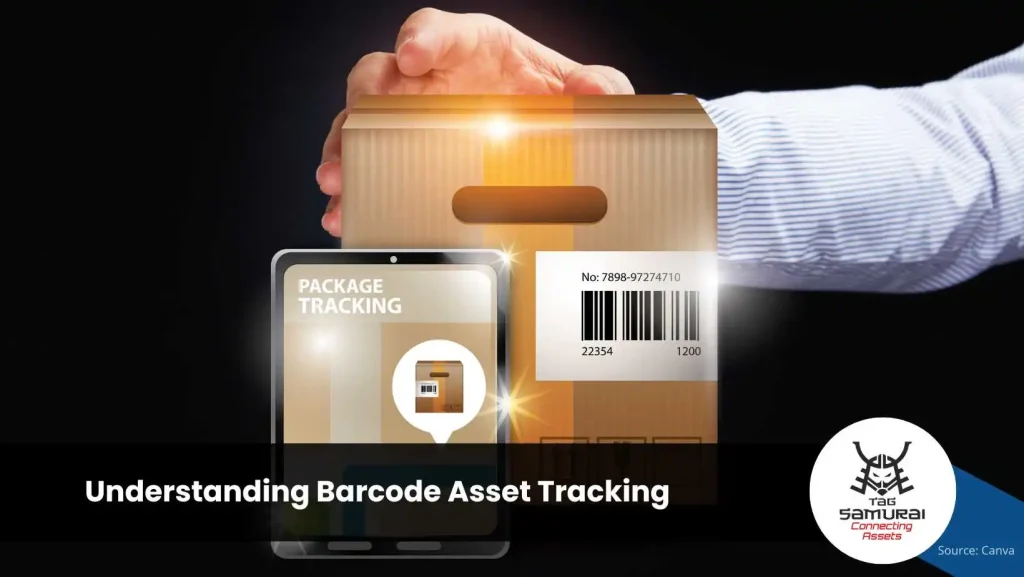
Barcode asset tracking is one of the most widely adopted methods for managing business assets because it is simple, affordable, and dependable. Although the technology looks basic from the outside, there is a clear and structured workflow behind every scan.
Read Also: Barcodes: Definition, Benefits, Types & More
How Barcode Asset Tracking Works in Practice
Barcode systems use visual identifiers, where each barcode represents a unique code linked to an asset profile in the database. When a user scans the code:
- The scanner captures the barcode pattern.
- Optical sensors read the black-and-white lines or QR code modules.
- The scanner converts the pattern into digital data.
- The asset record automatically updates in the central system.
This process ensures that every action—such as asset check-in, check-out, repairs, transfers, or audits—leaves a digital trail.
Types of Barcodes Used in Asset Management
Different industries use different barcode formats depending on asset complexity:
-
1D Linear Barcodes (e.g., Code 128, UPC)
Suitable for basic asset identification with limited data. -
2D Barcodes (e.g., QR Code, Data Matrix)
Can store significantly more information, including serial numbers, locations, and maintenance dates. -
Durable Industrial Barcodes
Printed on materials like polyester, metal plates, or laminated labels for harsher environments.
Why Businesses Still Rely on Barcode Asset Tracking
Despite newer technologies, barcode systems remain popular because:
- They provide highly accurate scans with minimal errors.
- They require little training, making onboarding easy.
- They integrate well with almost any ERP, EAM, or inventory system.
- The cost to print labels and buy scanners is very low.
For industries with structured workflows—like offices, retail, healthcare, and education—barcode tracking is more than enough to maintain order and reduce losses.
Where Barcode Asset Tracking Struggles
However, barcode tracking does come with operational limits:
- The scanner must have a direct view of the label.
- Scanning must be done one item at a time, which slows down large inventories.
- Labels can be affected by abrasion, temperature, moisture, or chemicals.
- Heavy manual involvement increases the risk of human error.
These constraints make barcodes less ideal for fast-moving or complex operational environments.
Understanding RFID Technology
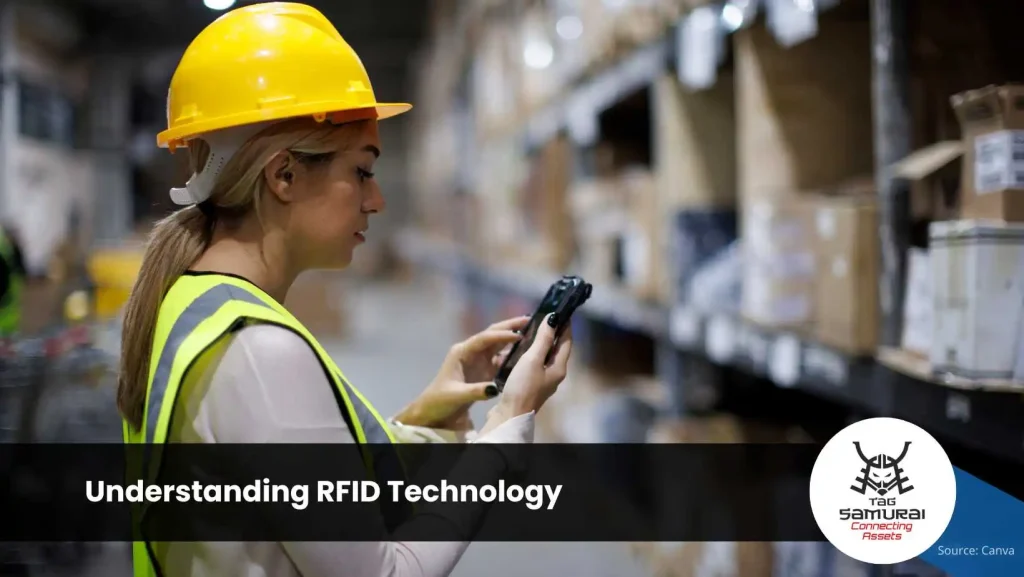
RFID (Radio Frequency Identification) is a more modern asset tracking method that uses radio waves to identify and capture data from tagged items. Unlike barcodes, RFID doesn’t rely on visual scanning—making it significantly faster and more automated.
See Also: QR Code: Definition, Types, Benefits, and Functions
How RFID Works in Depth
RFID systems consist of three main components:
-
RFID Tag
Contains a microchip and antenna. Tags can be passive, active, or battery-assisted. -
RFID Reader
Emits radio waves to communicate with the tag and retrieve asset data. -
Software System
Processes all scanned information into asset profiles, movement logs, or real-time dashboards.
When an RFID reader is activated, it sends radio signals that energize or communicate with nearby tags. The tag responds by transmitting its stored ID and data back to the reader. This enables:
- Multi-tag scanning (hundreds per second)
- Longer read ranges (1–20 meters depending on frequency)
- Real-time location tracking in certain setups
Types of RFID Tags and Frequencies
Different environments require different tag types:
- Low Frequency (LF) – short range, resistant to metal interference; common in animal tracking or access keys
- High Frequency (HF / NFC) – used for asset tagging, ID cards, or contactless systems
- Ultra-High Frequency (UHF) – longest range and fastest scanning; ideal for warehouses, logistics, manufacturing
Tags can also be:
- Passive (no battery, cheaper)
- Active (battery-powered, long range, real-time capability)
- Specialized (on-metal tags, rugged industrial tags, heat-resistant tags)
Why Businesses Choose RFID
RFID stands out for environments where time, accuracy, and automation matter:
- Faster inventory cycles—minutes instead of hours
- No line-of-sight required, enabling hidden or covered asset scans
- Higher visibility across large facilities
- Lower operational effort due to automated data capture
- Better tracking of asset movement in real-time or near-real-time
This efficiency helps companies reduce labor costs, prevent asset loss, and increase operational transparency.
Challenges and Considerations with RFID
Despite its advantages, RFID is not a perfect fit for everyone:
- Initial setup and tags are more expensive
- Metal surfaces and liquids can cause signal interference
- Installing fixed readers needs planning and calibration
- Not necessary for small-scale operations with limited assets
RFID shines most for medium-to-large businesses with high asset movement, complex workflows, or demanding operational environments.
Barcode vs RFID: Side-by-Side Comparison
Choosing between barcode asset tracking and RFID requires a clear understanding of how each technology performs in real-world operational conditions. Below is a comprehensive, point-by-point comparison to help decision-makers evaluate both systems based on cost, accuracy, scalability, efficiency, and environmental requirements.
Comparison Table: Barcode vs RFID
| Category | Barcode | RFID |
|---|---|---|
| Scanning Method | Manual, one-by-one | Automatic, bulk scanning |
| Line of Sight | Required | Not required |
| Read Range | Short (centimeters to a few feet) | Medium to long (up to several meters) |
| Speed | Slower, dependent on manual effort | Very fast, multiple items at once |
| Accuracy | Good but human-dependent | High accuracy with minimal human input |
| Durability | Can be damaged easily | Highly durable, can withstand harsh environments |
| Data Capacity | Limited (ID only) | High (can store complex data) |
| Security | Low, easy to copy | High, can be encrypted |
| Cost | Very low initial cost | Higher initial cost |
| Ideal Use Cases | Retail, small inventory, basic tracking | Warehousing, logistics, manufacturing, high-value assets |
1. Cost Comparison: Upfront, Operational, and Long-Term Costs
Barcode
- Low upfront cost: Barcode labels cost only cents per unit; scanners are affordable and widely available.
- Minimal setup: No infrastructure needed—just labels, scanners, and software.
- Low maintenance: Replacing damaged labels is inexpensive.
- Labor-dependent: Although cheap, barcode workflows require manual scanning that increases labor time.
RFID
- Higher initial investment: RFID tags, especially on-metal or rugged industrial tags, can cost significantly more.
- Infrastructure costs: May require fixed readers, antennas, or gateways for automated tracking setups.
- Lower long-term labor costs: Automated scanning reduces time spent on inventory audits and asset checks.
- Long-term ROI: Typically delivers savings in environments with high asset turnover or large inventories.
Summary:
Barcode is budget-friendly upfront; RFID reduces costs over time through automation.
2. Speed and Workflow Efficiency
Barcode
- Requires line-of-sight scanning, meaning users must physically aim the scanner at each label.
- Slower for large inventories due to one-by-one scanning.
- Effective when assets are organized, stationary, and easy to access.
RFID
- Can read multiple tags simultaneously, dramatically improving efficiency.
- Does not require line-of-sight—tags can be inside boxes, drawers, or cabinets.
- Ideal for quick cycle counts, rapid receiving, and automated asset movement tracking.
Impact:
RFID can reduce inventory time by 70–90%, especially in warehouses or hospitals.
3. Accuracy and Data Reliability
Barcode
- Highly accurate when scanned correctly.
- Prone to human error if staff forget to scan or scan the wrong item.
- Damaged or dirty labels may cause misreads or failed scans.
RFID
- Reduces manual errors with automatic scanning and logging.
- Tag collision can occur in dense environments but can be managed with proper configuration.
- Works well even in complex layouts where barcodes may be hard to access.
Verdict:
Both are accurate, but RFID provides more consistent data capture in fast-paced operations.
4. Environmental Durability
Barcode
- Standard labels can be affected by heat, chemicals, and abrasion.
- Industrial-grade labels are more durable but still require line-of-sight.
RFID
- RFID tags come in rugged forms: heat-resistant, waterproof, chemical-proof, on-metal, and outdoor-grade.
- Better suited for hostile environments such as manufacturing floors, mining sites, and field operations.
Verdict:
RFID is significantly more versatile for outdoor or industrial environments.
5. Scalability and Automation Potential
Barcode
- Scales well for small to medium operations.
- Difficult to automate scanning workflows fully.
- Tracking remains slow as asset volume increases.
RFID
- Designed for automation—gate readers, portal scanners, and handheld readers enable high scalability.
- Suitable for enterprises managing thousands of moving assets.
- Supports real-time visibility for large facilities.
Verdict:
RFID offers higher scalability and is future-ready for automation.
6. Use-Case Suitability
Best Uses for Barcode Tracking
- Offices, schools, libraries
- Retail inventory and POS systems
- IT equipment logging
- Environments where assets rarely move
- Organizations with tight budgets
Best Uses for RFID Tracking
- Large warehouses and distribution centers
- Manufacturing and automotive plants
- Healthcare (equipment location, patient tracking, sterilization processes)
- Airports, logistics hubs, and field service operations
- High-value assets that require real-time visibility
How to Choose the Best System for Your Business

Selecting the right asset tracking technology depends on your operational environment, asset behavior, internal workflow, and long-term efficiency goals. Below is a deeper breakdown of how businesses can evaluate the best-fit system.
1. Analyze Your Asset Volume and Movement Patterns
A simple rule of thumb:
- Low movement = Barcode
- High movement = RFID
If your assets move frequently—between departments, facilities, or field locations—RFID delivers more value.
If assets mostly remain static, barcode tracking is sufficient.
2. Consider the Environment Where Assets Are Used
Ask these questions:
- Are your assets exposed to dirt, chemicals, or heat?
- Are they stored in hard-to-reach places?
- Is the workspace indoor, outdoor, or mixed?
If the environment is rough or scanning access is limited, RFID is the more reliable option.
3. Evaluate Team Workflows and Labor Capacity
Barcode scanning depends on human behavior—staff must remember to scan at every checkpoint.
RFID reduces this dependency by automating data capture.
Choose RFID if:
- You want to minimize manual scanning
- You conduct frequent audits
- You want real-time asset visibility
Choose Barcode if:
- You prefer simple workflows
- Your team handles tracking reliably
- Speed is not a critical factor
4. Assess Budget and ROI Expectations
Budget-focused organizations often start with barcodes and adopt RFID later as operations grow.
Key considerations:
- Barcode has low initial cost but higher labor cost over time
- RFID has higher initial cost but reduces operational overhead
If your main goal is immediate affordability, barcode is the practical choice.
If your long-term goal is automation and labor reduction, RFID offers stronger ROI.
5. Identify Integration Needs with Existing Systems
Do you need:
- Real-time data?
- Automated logs?
- Mobile app scanning?
- Integration with ERP, EAM, CMMS, or WMS?
Barcode systems integrate easily with almost any software.
RFID integration requires more planning but unlocks advanced functionalities such as automated checkpoints and live dashboards.
6. Determine the Need for Future Scalability
If you expect asset volume to rise or plan to adopt automation, RFID provides a clearer upgrade path.
Barcode systems may eventually face:
- Slower audit cycles
- More manual labor
- Difficulties maintaining accuracy at scale
RFID, meanwhile, supports:
- Automated gates and readers
- Large-scale asset tracking
- Real-time monitoring across multiple sites
7. Consider a Hybrid Approach
Many organizations benefit from using both systems:
- Barcode for low-value, low-movement items
- RFID for high-value or frequently moved assets
A hybrid approach allows businesses to balance budget and efficiency without fully committing to one technology.
Real-World Case Example
Case Study: Warehouse Efficiency Boost
A mid-sized warehouse using barcodes struggled with slow inventory counts (4–5 hours per cycle). After switching to RFID:
- Inventory time dropped to 20 minutes
- Misplacement incidents fell by 60%
- Manual scanning labor reduced by 40%
The transition paid for itself in under 9 months.
TAG Samurai as a Practical Tool for Asset Tracking
Managing assets with either barcode or RFID often requires a system that can bring everything together in one place. TAG Samurai is an example of an asset management platform that supports both technologies, allowing businesses to monitor assets, record movements, and maintain accurate documentation.

How It Helps in Daily Operations
- Provides a centralized dashboard for tracking asset status
- Supports mobile-based scanning for barcodes
- Compatible with RFID workflows for faster updates
- Helps maintain asset histories, maintenance records, and movement logs
- Offers reporting features to support operational decisions
Instead of focusing on one tracking method, TAG Samurai enables organizations to use the approach that fits their environment—whether that means starting with barcodes, transitioning to RFID, or combining both for flexible asset management.
FAQs
1. Is RFID always better than barcodes?
Not always. RFID is faster and more automated, but barcodes are cheaper and easier for small operations.
2. Do RFID tags work on metal?
Yes, but they require special on-metal tags designed to avoid interference.
3. Can barcode and RFID be used together?
Yes. Many businesses use a hybrid system to balance cost and speed.
4. Are barcode labels waterproof?
Some labels are waterproof, but prolonged exposure can still damage them.
5. Which system is more accurate?
Both are accurate, but RFID offers better automation and reduces human error.
6. How far can RFID read?
Typically 1–20 meters, depending on tag type and reader power.
7. Is RFID worth the cost?
For fast-moving or large-scale operations, RFID usually delivers a positive ROI.
Conclusion
Barcode Asset tracking is ideal for low-cost, straightforward asset management. RFID delivers unmatched speed and automation for high-volume operations. Choosing the right system depends on your environment, asset movement, and long-term goals.
Also Read: RFID Applications in Everyday Life


