
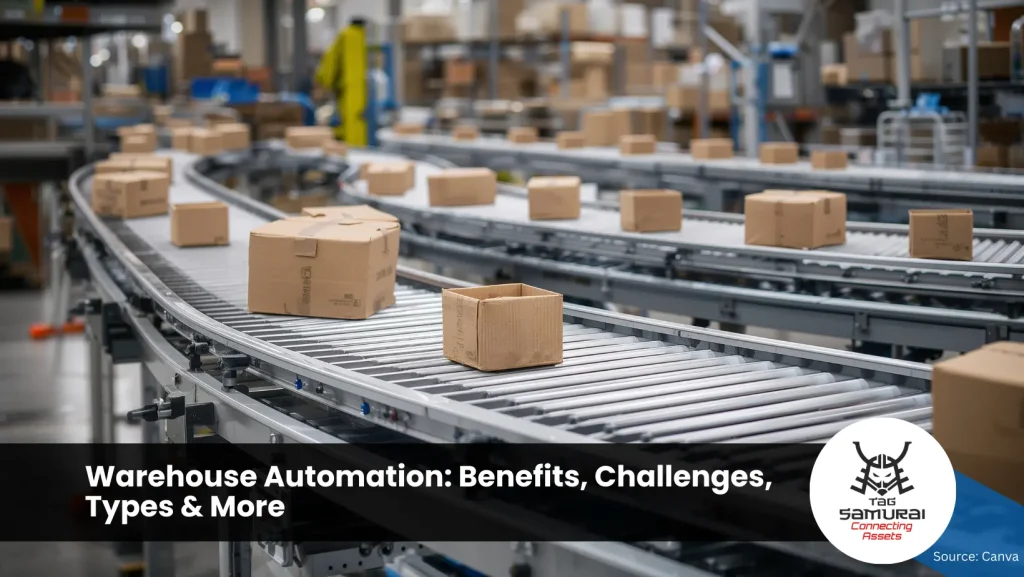
In the evolving landscape of supply chain management, warehouse automation stands as a pivotal innovation driving operational excellence. This technology encompasses robotics, AI-driven systems, and automated guided vehicles to optimize inventory handling, order picking, and fulfillment processes, directly addressing the demands for speed and precision in modern logistics.
Implementing warehouse automation yields significant benefits such as enhanced efficiency, reduced labor costs, and minimized errors, yet it presents challenges including substantial upfront investments and system integration hurdles. Explore the diverse types of warehouse automation solutions, their practical applications, and strategies to overcome obstacles for transformative results in your operations.
What Is Warehouse Automation?
Warehouse automation refers to the use of technology and machinery to streamline operations in storage and distribution facilities. It integrates robotics, software systems, and AI to handle tasks like inventory management, order picking, and shipping. This approach reduces human error, boosts efficiency, and scales with demand in e-commerce and manufacturing sectors.
By automating repetitive processes, businesses achieve faster throughput and lower operational costs. Key technologies include warehouse management systems (WMS) that provide real-time visibility into stock levels and optimize workflows. Automation addresses the growing need for speed in supply chain logistics.
1. Automated Storage and Retrieval Systems (AS/RS)
AS/RS uses computer-controlled cranes or shuttles to store and retrieve items from high-density racks. Ideal for space-constrained environments, it minimizes manual handling and enhances accuracy in inventory tracking.
2. Conveyor and Sortation Systems
These systems transport goods via belts and rollers, sorting packages by destination. They support high-volume operations, reducing fulfillment times in distribution centers.
3. Autonomous Mobile Robots (AMRs)
AMRs navigate warehouses independently, transporting pallets or totes to workstations. Equipped with sensors, they adapt to layouts, improving flexibility over fixed-path AGVs.
4. Pick-to-Light and Voice-Directed Systems
These guide workers with lights or audio cues for precise picking, speeding up order assembly while maintaining accuracy.
Benefits of warehouse automation include increased productivity, up to 50% reduction in labor costs, and enhanced safety by limiting human exposure to hazards. It supports just-in-time inventory, minimizing storage needs.
However, challenges arise in high initial investments, integration with legacy systems, and the need for skilled maintenance. Scalability issues and potential downtime require careful planning.
To implement effectively, assess facility layout, integrate scalable tech, and train staff. Future trends point to AI-driven predictive analytics for even greater optimization in warehouse operations.
Read also: 3PL (Third-Party Logistics)
Types of Warehouse Automation Technologies
Warehouse automation technologies revolutionize logistics by enhancing speed, accuracy, and scalability in storage and retrieval processes. These systems integrate robotics, software, and hardware to minimize manual labor while optimizing space utilization. Common implementations address picking, sorting, and inventory tracking in distribution centers.
1. Automated Storage and Retrieval Systems (AS/RS)
AS/RS use computer-controlled cranes or shuttles to store and retrieve items from high-density racks. Ideal for high-volume operations, they reduce floor space needs by up to 80% and achieve retrieval times under 30 seconds. Variants include unit-load and mini-load systems for pallets or totes.
2. Automated Guided Vehicles (AGVs)
AGVs are driverless vehicles that transport goods along predefined paths using magnetic tapes, lasers, or vision systems. They support just-in-time delivery in manufacturing and e-commerce fulfillment, improving throughput by 20-50% while enhancing worker safety through collision avoidance.
3. Conveyor and Sortation Systems
These belt or roller-based systems move products efficiently across facilities, often integrated with diverters for routing. High-speed sorters handle thousands of items per hour, reducing manual sorting errors in parcel distribution. Modular designs allow scalability for varying throughput demands.
4. Robotic Picking and Packing Systems
Collaborative robots (cobots) or autonomous mobile robots (AMRs) perform precise picking using AI vision and grippers. They adapt to diverse SKUs, cutting order fulfillment time by 30-70%. Integration with AI enables dynamic slotting for optimal picker paths in warehouses.
5. Warehouse Management Systems (WMS)
WMS software orchestrates automation through real-time inventory visibility, order optimization, and integration with IoT devices. Cloud-based versions support predictive analytics for demand forecasting, ensuring seamless coordination of hardware like AGVs and AS/RS in complex supply chains.
Selecting the right warehouse automation type depends on operational scale, product variety, and integration needs. Hybrid approaches combining multiple technologies yield the highest returns in efficiency and cost savings.
Also Read: 7 Tips To Improve Warehouse Efficiency
Challenges in Adopting Warehouse Automation
Adopting warehouse automation involves significant hurdles that can delay implementation and impact efficiency gains. These challenges span financial, technical, and human factors, requiring careful planning to overcome. Understanding them helps organizations mitigate risks and maximize returns on investment in automated storage and retrieval systems (AS/RS) and robotic picking solutions.
1. High Initial Costs
The upfront capital for warehouse automation technologies, such as autonomous mobile robots (AMRs) and automated guided vehicles (AGVs), often exceeds budgets for small to medium enterprises. Installation, including infrastructure modifications like upgraded flooring and power systems, adds to expenses. Long-term ROI depends on volume throughput, but short-term financial strain deters adoption, especially amid economic uncertainties.
2. Integration with Legacy Systems
Many warehouses rely on outdated warehouse management systems (WMS) that lack compatibility with modern automation tools. Retrofitting or replacing these systems demands extensive IT expertise and can cause operational disruptions. Data silos between ERP software and new robotics lead to inefficiencies in inventory tracking and order fulfillment processes.
3. Workforce Training and Resistance
Shifting from manual to automated operations requires reskilling employees for roles in monitoring and maintaining robots, rather than physical labor. Resistance arises from job displacement fears, slowing adoption. Comprehensive training programs, focusing on upskilling for human-robot collaboration, are essential to build acceptance and reduce turnover in fulfillment centers.
4. Maintenance and Scalability Issues
Automated systems demand regular upkeep to prevent downtime, with specialized technicians often in short supply. Scaling automation as business grows involves phased implementations that risk inconsistencies. Selecting modular solutions, like flexible conveyor systems, ensures adaptability without full overhauls, addressing long-term operational challenges in dynamic supply chains.
Addressing these obstacles through pilot programs, vendor partnerships, and phased rollouts enables smoother transitions to automated warehousing, enhancing overall logistics performance.
Best Practices for Implementation
Implementing warehouse automation requires strategic planning to maximize efficiency and minimize disruptions. Successful integration of systems like automated storage and retrieval systems (AS/RS) and conveyor networks hinges on aligning technology with operational needs. This approach ensures scalable solutions that adapt to growing demands in supply chain management.
Key to effective warehouse automation implementation is a phased rollout. Begin with pilot programs to test technologies such as robotic picking systems in controlled environments. This method identifies potential issues early, reducing downtime and costs associated with full-scale deployment.
1. Conduct a Comprehensive Needs Assessment
Evaluate current warehouse workflows, inventory levels, and throughput requirements. Analyze pain points like manual picking errors or space constraints. Incorporate data from warehouse management systems (WMS) to prioritize automation types, such as goods-to-person solutions for high-volume operations.
- Identify key performance indicators (KPIs) like order fulfillment speed and accuracy.
- Engage stakeholders from operations, IT, and finance for holistic insights.
- Benchmark against industry standards for automated warehousing.
2. Select Scalable and Compatible Technologies
Choose automation tools that integrate seamlessly with existing ERP and WMS platforms. Opt for modular systems allowing incremental upgrades, such as adding AI-driven inventory robots over time. Ensure vendor support includes training and maintenance for long-term reliability.
- Prioritize interoperability to avoid siloed systems.
- Consider energy-efficient options to lower operational costs.
- Evaluate ROI projections based on real-world case studies.
3. Invest in Workforce Training and Change Management
Automation transforms roles, shifting focus from repetitive tasks to oversight and analytics. Provide comprehensive training on new interfaces and safety protocols. Foster a culture of continuous improvement to address resistance and enhance adoption rates in automated fulfillment centers.
- Develop customized programs for operators and supervisors.
- Monitor employee feedback to refine processes.
- Partner with experts for certification in automation handling.
4. Ensure Robust Cybersecurity and Maintenance Protocols
Protect automated systems from cyber threats with firewalls and regular audits. Implement predictive maintenance using IoT sensors to prevent equipment failures. These practices sustain uptime in dynamic e-commerce environments, optimizing overall warehouse productivity.
- Conduct vulnerability assessments quarterly.
- Schedule downtime for updates without impacting peak hours.
- Document procedures for quick recovery.
By following these best practices, businesses can overcome common challenges in warehouse automation, achieving up to 50% faster throughput and reduced labor costs. Focus on data-driven decisions to future-proof operations against evolving logistics trends.
Read also: What Is Wholesale Distribution? Benefits, Examples & Tips
Top Benefits of Warehouse Automation
Warehouse automation involves using technologies like robotics, AI-driven systems, and conveyor belts to streamline operations in distribution centers and fulfillment facilities. Implementing these solutions addresses key pain points in manual processes, leading to significant operational enhancements. This section explores the primary advantages of adopting warehouse automation systems.
1. Increased Operational Efficiency
Automation accelerates order picking, packing, and sorting tasks through automated guided vehicles (AGVs) and robotic arms. Workers shift from repetitive labor to oversight roles, boosting throughput by up to 50% in high-volume environments. Real-time data integration ensures seamless workflow, minimizing bottlenecks common in traditional setups.
2. Cost Savings and Reduced Labor Expenses
By automating routine activities, businesses lower dependency on manual labor, cutting staffing costs over time. Initial investments in automation yield returns via reduced overtime and error-related losses. For instance, automated storage and retrieval systems (AS/RS) optimize space utilization, decreasing the need for expansive facilities.
3. Enhanced Accuracy and Inventory Control
Automated inventory tracking with RFID and barcode systems eliminates human errors in stock counts, achieving near-perfect accuracy rates. This precision supports just-in-time inventory practices, reducing overstock and stockouts. For deeper insights into warehouse inventory management, explore effective strategies at TAG Samurai.
4. Improved Worker Safety and Scalability
Automation handles hazardous tasks like heavy lifting, lowering injury risks and improving morale. Systems scale effortlessly with demand fluctuations, enabling businesses to expand without proportional workforce increases. Overall, these benefits position warehouse automation as a strategic tool for competitive advantage in supply chain management.
Overcoming Common Automation Challenges
Warehouse automation promises efficiency gains, but implementing it often reveals hurdles. Addressing these challenges requires strategic planning and proven solutions. This guide explores key obstacles in warehouse automation and practical ways to surmount them, ensuring smoother operations and higher returns on investment.
1. Integration with Legacy Systems
Many warehouses rely on outdated equipment that doesn’t mesh easily with modern automation tools like AGVs or robotic pickers. Poor integration leads to data silos and operational bottlenecks. To overcome this, conduct a thorough audit of existing infrastructure. Adopt middleware solutions or modular automation systems that bridge old and new technologies, facilitating seamless data flow and minimizing downtime.
2. High Initial Costs and ROI Concerns
The upfront expense for automation technologies, including software and hardware, can deter adoption. Calculate total cost of ownership, factoring in long-term savings from reduced labor and error rates. Start with pilot projects in high-volume areas to demonstrate quick wins. Leverage financing options or government incentives for warehouse automation to ease financial burdens and accelerate ROI.
3. Workforce Resistance and Skill Gaps
Employees may fear job loss from automation, leading to resistance. Bridge skill gaps through targeted training programs on operating automated guided vehicles and inventory management software. Emphasize how automation augments human roles, focusing on higher-value tasks. Foster a culture of continuous learning to build buy-in and enhance productivity in automated warehouses.
4. Maintenance and Scalability Issues
Automated systems demand regular upkeep, and scaling can strain resources. Implement predictive maintenance using IoT sensors to preempt failures in conveyor systems or sorting robots. Design scalable architectures from the outset, allowing modular expansions. Partner with reliable vendors for ongoing support, ensuring warehouse automation evolves with business growth without major disruptions.
By tackling these common warehouse automation challenges head-on, businesses can unlock the full potential of technologies like AS/RS and AI-driven optimization. Strategic implementation turns obstacles into opportunities for streamlined supply chain management.
Emerging Trends in Warehouse Automation
Warehouse automation integrates advanced technologies to streamline operations, reduce errors, and boost efficiency in distribution centers. Emerging trends focus on AI-driven solutions, robotics, and IoT connectivity, transforming traditional warehouses into smart facilities. These innovations address growing e-commerce demands and supply chain complexities.
1. AI and Machine Learning Integration
Artificial intelligence optimizes inventory management through predictive analytics, forecasting demand with high accuracy. Machine learning algorithms enable real-time decision-making, such as dynamic routing for order fulfillment. This trend minimizes stockouts and overstock, enhancing overall supply chain resilience.
2. Autonomous Mobile Robots (AMRs)
AMRs navigate warehouses without fixed paths, using sensors for obstacle avoidance. They handle picking, sorting, and transportation tasks, increasing throughput by up to 50%. Integration with warehouse management systems (WMS) allows seamless scalability for varying order volumes.
Benefits of Warehouse Automation
Automation reduces labor costs by 20-30% while improving accuracy to 99.9%. It accelerates order processing, enabling same-day fulfillment, and enhances worker safety by handling repetitive, hazardous tasks.
- Faster throughput and scalability
- Reduced operational errors
- Improved inventory visibility
Challenges in Implementation
High initial costs and integration complexities pose barriers, often requiring significant upfront investment. Skill gaps in managing advanced systems and potential downtime during upgrades add risks. Addressing these through phased rollouts and training ensures smoother adoption.
- Cybersecurity vulnerabilities
- Maintenance demands
- Adaptation to legacy infrastructure
Future Outlook
Trends point toward collaborative robotics and edge computing for faster data processing. Sustainability drives energy-efficient automation, aligning with green logistics goals. Businesses adopting these will gain competitive edges in efficiency and adaptability.
The Future of Automated Warehouses
Automated warehouses are transforming supply chain operations through advanced robotics and AI integration. As e-commerce surges, these systems promise efficiency gains, reducing human error and operational costs. Looking ahead, innovations in machine learning and IoT will drive smarter inventory management and predictive maintenance.
1. Types of Warehouse Automation
Warehouse automation encompasses various technologies tailored to different needs. Autonomous mobile robots (AMRs) navigate facilities to transport goods, enhancing flexibility in dynamic environments. Conveyor systems and automated storage and retrieval systems (AS/RS) optimize space utilization in high-volume settings.
Emerging types include AI-powered picking systems that use computer vision for accurate order fulfillment. Collaborative robots, or cobots, work alongside humans, boosting productivity without full replacement.
2. Benefits of Automated Warehouses
- Increased throughput: Automation handles repetitive tasks at higher speeds, meeting peak demand.
- Cost savings: Long-term reductions in labor and error-related expenses.
- Scalability: Systems adapt to business growth via modular designs.
- Enhanced safety: Robots manage hazardous areas, minimizing worker injuries.
3. Challenges in Implementation
- High initial investment: Upfront costs for robotics and infrastructure can deter small operations.
- Integration complexities: Merging new tech with legacy systems requires expertise.
- Skill gaps: Workforce needs training in AI and robotics maintenance.
- Cybersecurity risks: Connected systems are vulnerable to breaches, demanding robust protocols.
Overcoming these involves phased adoption and partnerships with automation experts. Future trends point to edge computing for real-time decisions and sustainable practices like energy-efficient robots. By 2030, fully autonomous warehouses could dominate, revolutionizing global logistics with seamless, data-driven operations.
Enhance Warehouse Automation with TAG Samurai Asset Management

Warehouse automation thrives on precise management of fixed assets like AS/RS, AGVs, and conveyor systems, alongside supply assets such as inventory. TAG Samurai offers a robust platform for fixed and supply asset management, integrating seamlessly with WMS to provide real-time visibility and predictive analytics.
This solution addresses key challenges like maintenance downtime and legacy system integration by enabling efficient tracking, compliance monitoring, and optimized resource allocation. Businesses using TAG Samurai report improved asset utilization, reduced operational costs, and enhanced scalability in automated environments.
To explore how TAG Samurai can support your warehouse operations, schedule a free consultation.
FAQ
1. What is warehouse automation?
Warehouse automation involves using technology like robotics, AI, and software to streamline tasks in storage and distribution facilities, such as inventory management and order picking. It reduces human error, boosts efficiency, and scales with demand in e-commerce and manufacturing. Key systems include warehouse management software for real-time stock visibility and optimized workflows.
2. What are the benefits of warehouse automation?
Warehouse automation increases productivity by up to 50%, cuts labor costs significantly, and improves safety by minimizing exposure to hazards. It enables faster throughput, just-in-time inventory, and near-perfect accuracy in order fulfillment. Businesses gain a competitive edge through enhanced scalability and reduced operational expenses over time.
3. What are the main types of warehouse automation?
Common types include Automated Storage and Retrieval Systems (AS/RS) for high-density storage, Autonomous Mobile Robots (AMRs) for flexible transport, and conveyor systems for efficient sorting. Robotic picking and packing systems use AI for precise handling, while Warehouse Management Systems (WMS) orchestrate overall operations. Hybrid approaches combining these technologies offer the best results for varying needs.
4. What are the challenges of implementing warehouse automation?
High initial costs and integration issues with legacy systems are major hurdles, often requiring significant upfront investment and IT expertise. Workforce resistance and skill gaps arise from job changes, while maintenance demands specialized technicians to avoid downtime. Scalability concerns can complicate growth, but phased rollouts and training help overcome these obstacles.
5. How much does warehouse automation cost?
Costs vary widely based on scale and technology, with initial investments for systems like AMRs or AS/RS often exceeding budgets for small operations due to hardware, installation, and infrastructure upgrades. Long-term ROI comes from labor savings and efficiency gains, typically recouping expenses within a few years for high-volume users. Pilot programs can demonstrate value without full commitment.
6. Is warehouse automation worth it for small businesses?
For small businesses, warehouse automation can be worthwhile if focused on modular, scalable solutions like basic WMS or simple robots to address specific pain points without massive upfront costs. It offers quick wins in efficiency and error reduction, but requires careful ROI analysis given financial constraints. Starting small and expanding as demand grows maximizes benefits while minimizing risks.
7. What are real-world examples of warehouse automation?
Amazon uses Kiva robots, now Amazon Robotics, to transport shelves to workers, cutting picking times dramatically and boosting throughput by 300-400%. DHL’s AutoStore system employs cube-based robots for dense storage, optimizing space in urban facilities. Ocado’s AI-orchestrated robots handle grocery orders with minimal human intervention, achieving rapid fulfillment.
8. How do you implement warehouse automation?
Start with a needs assessment to evaluate workflows and prioritize technologies like AS/RS for space issues. Choose scalable systems compatible with existing setups and invest in staff training for smooth adoption. Use phased rollouts with pilot programs to test and refine, ensuring cybersecurity and maintenance protocols for ongoing reliability.
9. What are the future trends in warehouse automation?
AI and machine learning will drive predictive analytics for demand forecasting and real-time optimization in warehouses. Autonomous mobile robots and collaborative cobots will enhance flexibility, while IoT enables smarter connectivity and predictive maintenance. Sustainability trends focus on energy-efficient systems, positioning automation as key to resilient supply chains by 2030.
10. How does warehouse automation improve efficiency?
Automation streamlines repetitive tasks like picking and sorting with robots and conveyors, reducing fulfillment times by up to 70% and errors to near zero. Real-time inventory tracking via WMS prevents bottlenecks and supports just-in-time practices. Workers focus on higher-value roles, leading to overall productivity gains and scalable operations in dynamic environments.
Conclusions
Warehouse automation transforms logistics by integrating robotics, AI, and software to enhance efficiency, accuracy, and scalability in distribution centers. Key types such as AS/RS, AGVs, AMRs, conveyor systems, and WMS address core operations like inventory tracking, picking, and sorting, delivering up to 50% throughput improvements and 20-50% labor cost reductions. Real-world applications, from Amazon’s robotic fulfillment to DHL’s compact storage, demonstrate tangible gains in speed and space utilization, supporting just-in-time practices and e-commerce demands while minimizing human error and hazards.
Despite challenges like high initial costs, legacy system integration, and workforce reskilling, strategic implementation through phased rollouts, pilot programs, and modular technologies mitigates risks and ensures ROI. Future trends in AI-driven predictive analytics, collaborative robotics, and sustainable designs position automated warehouses as essential for resilient supply chains. Businesses adopting these solutions gain competitive advantages, optimizing operations for long-term growth and adaptability in dynamic markets.
Read also: What is Supply Chain Management (SCM)


