
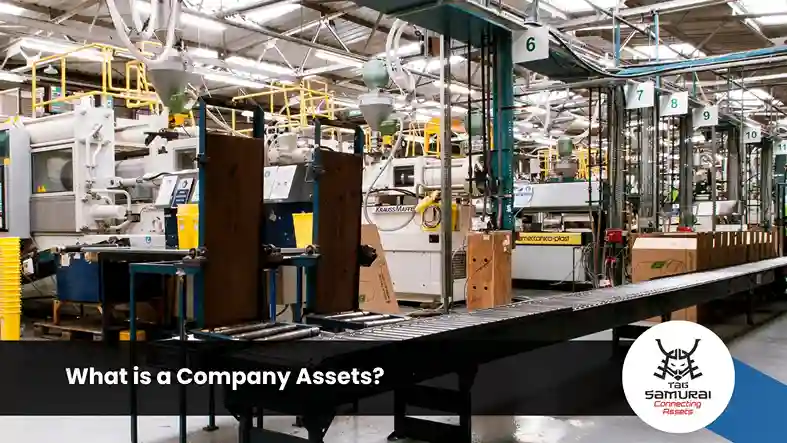
In the world of commerce, success is often measured by what a business owns and how well it uses those resources. Essentially, a company asset is any resource with economic value that a corporation owns or controls. These items are expected to provide a future benefit, either by generating cash flow, reducing expenses, or improving sales. Unlike personal belongings, company assets are strategic tools used to achieve specific business objectives.
Understanding this concept is the first step in any robust asset management strategy. Because assets represent the strength of a company’s balance sheet, managing them effectively is critical for long-term stability. This article will define what constitutes a company asset, explore their various categories, and explain how they evolve through the asset lifecycle.
The Core Definition and Value of Assets

To answer the question “What is a Company Asset?”, we must look beyond the physical objects. In fact, an asset can be anything from a piece of heavy machinery to a specialized digital patent. Basically, if it has a measurable value and the company has the legal right to use it, it is an asset.
Furthermore, it is important to understand what is an asset? that exist in the broader financial world. For a business, an asset must be capable of being expressed in monetary terms. Consequently, these resources are recorded on the company’s financial statements. They provide the necessary “fuel” for the asset management process, allowing the business to produce goods and services for its customers.
Classifying Company Assets for Better Management

Not all assets are managed in the same way. Therefore, businesses categorize them based on their liquidity and their physical form.
Current vs. Non-Current Assets
Initially, assets are divided by how quickly they can be converted into cash. Current assets, like inventory and accounts receivable, are expected to be used within one year. In contrast, non-current assets are long-term investments. These long-term resources are what we typically call fixed asset. Because they stay with the company for years, they require a more detailed management approach.
Tangible vs Intangible Assets
Assets can also be classified by their physical presence. Physical assets and how to manage them involve looking at machinery, vehicles, and buildings. On the other hand, intangible assets like trademarks, copyrights, and brand reputation have no physical form. However, in the modern digital economy, intangible assets often carry more value than physical ones.
Operating vs Non-Operating Assets
Furthermore, assets are categorized by their role in daily activities. Operating assets, such as capital goods, are essential for the primary business functions. Non-operating assets might include unused land or short-term investments that generate interest but are not part of the core production process.
Why Understanding Your Assets Matters
a clear grasp of your company’s assets, financial reporting becomes a guessing game. Therefore, knowing exactly what you own is vital for several reasons.
Accurate Financial Reporting
Assets represent the “left side” of the accounting equation (Assets = Liabilities + Equity). Consequently, if you miscalculate your assets, your entire financial health is misrepresented. By maintaining an accurate record, you provide transparency to investors and creditors.
Optimizing Resource Allocation
By understanding which assets are productive and which are not, managers can make better decisions. For instance, if a piece of equipment is constantly causing asset downtime those losses might lead a manager to sell it. Instead, the capital can be reinvested in more efficient resources.
Risk Mitigation and Insurance
Physical resources are subject to theft, fire, or damage. Thus, knowing the exact value of your company assets allows you to secure the right insurance coverage. In addition, it helps in creating a disaster recovery plan that protects the company’s core operations.
The Journey of a Company Asset
Every asset, from the smallest laptop to the largest factory, follows a specific path. This is known as the asset lifecycle.
Planning and Acquisition
The process starts when a business identifies a need. Whether it is a new fleet of trucks or a software license, the acquisition must be strategic. During this stage, companies must evaluate the total cost of ownership (TCO) to ensure the asset will be profitable.
Utilization and Maintenance
Once acquired, the asset must be put to work. However, it won’t remain productive without care. By implementing a structured asset management process, companies can ensure their assets remain in top condition. Regular maintenance prevents the asset from failing prematurely.
Disposal and Replacement
Eventually, every asset reaches the end of its usefulness. Whether it becomes obsolete or simply wears out, it must be disposed of responsibly. By removing old assets from the books, the company avoids paying unnecessary taxes and insurance on “ghost assets.”
Managing High-Value Business Assets
In many industries, the most important assets are the ones used to create other products. These are often referred to as capital goods.
The Impact of Machinery and Technology
Heavy machinery and advanced IT systems are the engines of modern growth. Because these assets are expensive, they are usually classified as fixed asset. Consequently, their management requires specialized skills and dedicated software to track their performance and depreciation.
Managing the Asset Hierarchy
In large organizations, it is easy to lose track of sub-components. By establishing a clear asset management hierarchy, businesses can see how individual parts contribute to the whole. For example, a single engine (asset) is part of a specific truck (parent asset), which belongs to a specific regional fleet (site). This level of detail is essential for effective oversight.
The Digital Transformation of Asset Tracking
In the past, assets were tracked using paper ledgers or simple spreadsheets. However, modern businesses require more precision.
Real-Time Visibility
With digital tools, managers can see the status of every company asset in real-time. This is especially important for physical assets them across multiple locations. QR codes and RFID tags allow for instant identification and location tracking.
Preventing Ghost and Zombie Assets
A “ghost asset” is something listed on the books that is physically missing. A “zombie asset” is something physically present but not listed on the books. Both are dangerous for financial accuracy. By utilizing automated software, companies can eliminate these discrepancies and ensure their balance sheet is 100% accurate. Financial Dynamics Depreciation and Valuation
Assets lose value over time, and a business must account for this “wear and tear.”
Understanding Depreciation
Except for land, almost all company assets depreciate. As a result, businesses must use specific formulas to record this loss of value every year. This ensures that the asset’s value on the balance sheet reflects its actual condition. Furthermore, it provides a tax benefit by reducing taxable income.
Revaluation and Impairment
Sometimes, an asset’s value might drop suddenly due to market changes. This is called “impairment.” Alternatively, some assets might increase in value. By regularly reviewing asset valuations, a company ensures its financial health is accurately reported to stakeholders.
Future Trends in Asset Management
The way we define and manage company assets is changing. With the rise of AI and IoT, assets are becoming “smarter.”
Smart Assets and IoT
Now, many physical assets are equipped with sensors. These sensors can report on their own health, usage, and location. This technology allows for predictive maintenance, where the asset tells you it needs a repair before it actually breaks. Consequently, this reduces asset downtime and extends the asset’s life.
Sustainability and Green Assets
In addition, there is a global move toward sustainable assets. Companies are now investing in “green” machinery that uses less power and creates less waste. By doing so, they not only help the environment but also lower their long-term operational costs.
FAQ
What is the most common example of a company asset?
Common examples include cash, inventory, office equipment, vehicles, and buildings. Furthermore, intangible items like patents and software licenses are also considered vital company assets.
How do current assets differ from non-current assets?
Current assets are expected to be converted into cash within one year. In contrast, non-current assets, often called fixed asset, are long-term investments used for multiple years.
Why is it important to track “Physical Assets”?
Because physical items can be lost, stolen, or broken, they require constant monitoring. Effective physical assets strategies prevent the occurrence of ghost assets.
How does depreciation affect company assets?
Depreciation reduces the value of an asset over its useful life. Consequently, it reflects the asset’s wear and tear and provides a tax deduction for the business.
Can an employee be considered a “Company Asset”?
While people are a company’s most valuable resource, they are not technically “assets” in an accounting sense because the company does not “own” them. They are usually categorized as human capital.
What is the “Asset Lifecycle”?
The asset lifecycle covers every stage of an asset’s existence, from planning and purchase to maintenance and final disposal.
How does a clear “Asset Management Hierarchy” help?
It organizes assets into logical groups, making it easier to track maintenance costs and assign responsibility. This is especially helpful in large factories or multi-site corporations.
What happens if a company asset is not maintained?
Neglect leads to premature failure and increased asset downtime. Ultimately, this costs the company more in emergency repairs and lost production than regular maintenance would have.
How does technology improve the management of company assets?
Software like TAG Samurai automates tracking, maintenance alerts, and auditing. As a result, it eliminates human error and provides a “single source of truth” for all asset data.
What is a “Ghost Asset”?
A ghost asset is an item that is still listed on the company’s books but is physically missing or no longer in use. By removing these through audits, companies can save on insurance and tax costs.
Conclusion
To conclude, a company asset is much more than just an entry on a balance sheet. Instead, it is a dynamic tool that, if managed correctly, can drive a business toward unprecedented growth. From the initial acquisition to the final disposal at the end of the asset lifecycle, every stage requires a disciplined approach.
By understanding the different types of assets and utilizing modern tracking technology, you can protect your investments. Ultimately, well-managed assets lead to higher efficiency, more accurate financial reporting, and a much stronger competitive position in the market. In the end, your assets should be your greatest strength.
Master Your Company Assets with TAG Samurai
Manual tracking is a risk you cannot afford. TAG Samurai Inventory Management provides the digital foundation you need to manage your business resources with precision. Whether you are tracking fixed assets or complex capital goods, our platform helps you eliminate inefficiencies and maximize your ROI.


- Explanation: What Is Depreciating Assets? - 21/02/2023
- The Best Software For Maintenance Management – TAG Samurai - 20/02/2023
- The Example of Long-Term Assets - 01/12/2022

