

Imagine biting into a crisp apple in the middle of a sweltering tropical summer, or a patient receiving a life-saving vaccine that was manufactured thousands of miles away. These everyday miracles are not accidental. They are the result of a complex, highly synchronized, and incredibly disciplined system known as Cold Chain Logistics.
At its core, cold chain logistics is a science, a technology, and a process. It is the uninterrupted series of refrigerated production, storage, and distribution activities, along with associated equipment and logistics, which maintain a desired low-temperature range. It is used to preserve and help extend the shelf life of products, such as fresh agricultural produce, seafood, frozen food, photographic film, chemicals, and pharmaceutical drugs.
Why is the Cold Chain Vital?
In the modern global economy, we no longer eat only what is grown in our backyard. Our supply chains have stretched across oceans and continents. However, nature has a ticking clock. The moment a fruit is picked or a biological medicine is bottled, it begins to degrade. Heat is the primary enemy of quality and safety.
What is Cold Chain Logistics?
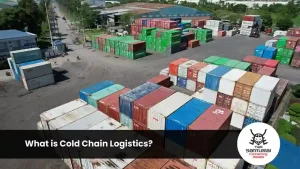
To the untrained eye, Cold Chain Logistics might look like standard shipping with a bit of air conditioning. However, in the world of professional supply chain management, it is an entirely different beast. While standard logistics focuses primarily on speed and cost-efficiency, the cold chain adds a third, non-negotiable dimension: Thermal Integrity.
To put this into perspective, consider the nature of the goods being moved. If a shipment of t-shirts arrives two hours late, they are still t-shirts. On the other hand, if a shipment of raw tuna sits on a loading dock for two hours in the sun, it is no longer a product it is a liability. Consequently, every decision in this industry is dictated by the thermometer rather than just the clock.
Defining the Professional Terminology
In order to understand how this process works, we must first master the language of the industry. Professionals don’t just talk about “cold” or “hot”, instead, they utilize specific temperature bands designed for product stability.
- Deep Frozen (-25°C to -30°C): This is the zone for seafood and certain ice cream products. At these temperatures, all biological activity is essentially paused.
- Frozen (-18°C to -20°C): The standard for meat, frozen vegetables, and many pre-packaged meals.
- Chilled (2°C to 4°C): Often called the “cool” range. This is the sweet spot for dairy, eggs, and fresh-cut produce.
- Pharma Cold Chain (2°C to 8°C): A highly regulated range specifically for vaccines and biologics. Even a 1-degree deviation here can trigger a formal investigation.
- Controlled Room Temperature (15°C to 25°C): Used for certain wines, chocolates, and specialized chemicals that don’t need to be cold but cannot get hot.
The “Chain” in Cold Chain: Why it Matters
The reason we use the word “chain” is quite deliberate. As the saying goes, a chain is only as strong as its weakest link. In logistics, these links represent every moment a product changes hands from the producer to the processor, and finally to the delivery truck.
Furthermore, if the temperature rises above the safety limit at any of these stages even for a brief period the “chain” is officially broken. This is known as a temperature excursion. Once the chain is broken, the damage is often irreversible. For instance, you cannot simply “re-freeze” a spoiled product and expect it to regain its original quality, the molecular damage is already done.
Also Read: Logistics Service Provider: Definition, Types, Benefits & More
Cold Chain vs Standard Logistics: A Comparison
To further clarify the distinction, let’s look at how these two worlds compare side-by-side:
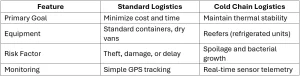
The Science of Shelf Life
Beyond just shipping, there is a deep scientific element at play here. Every perishable product has a “shelf life,” but it’s more accurate to think of it as a “metabolic clock.” For example, in organic products like fruits, the cold chain works by slowing down respiration.
Just as humans breathe, plants continue to “breathe” after harvest. The warmer the environment, the faster they breathe, and the faster they wither. By lowering the temperature, we effectively put the product into a state of “hibernation,” stretching its life from days to weeks. In a similar fashion, for pharmaceuticals, the cold chain prevents denaturation the breakdown of complex proteins that makes medicine effective.
Ultimately, understanding that this is a battle against biology and chemistry helps explain why the cold chain is so specialized. Now that we have defined the ‘what,’ we can move forward to examine the physical components that make this possible.
The 5 Essential Pillars of Cold Chain Infrastructure

Now that we understand the “what” and “why” of temperature control, we must look at the “how.” In order to maintain a seamless flow of chilled goods, the industry relies on five core pillars. Think of these as the structural foundation of the entire operation. If even one pillar fails, the entire integrity of the shipment is at risk.
1. Cold Storage Facilities
First and foremost, every cold chain begins and ends with specialized storage. Unlike a standard warehouse, a cold storage facility is a high-tech environment designed to pull heat away from products.
- Blast Freezers: These are used to move products (like meat or seafood) through the “critical zone” of bacterial growth as quickly as possible.
- Cold Rooms: These serve as massive refrigerators for short-term storage before the goods are loaded onto trucks. Moreover, these facilities often feature “dock shelters” insulated seals around loading bay doors—to ensure that cold air doesn’t escape while a truck is being loaded.
2. Specialized Packaging
Once a product leaves the warehouse, it needs a “personal shield” against the external environment. Depending on the sensitivity of the cargo, logistics experts choose between two main types of packaging:
- Passive Packaging: This includes expanded polystyrene (EPS) foam, specialized liners, and gel packs or dry ice. While cost-effective, passive systems have a limited “battery life” and cannot adjust to extreme outside temperature shifts.
- Active Packaging: This involves sophisticated containers with their own internal cooling systems. Essentially, these act like portable refrigerators, using electricity or specialized batteries to keep the temperature precise for days or even weeks.
3. Temperature-Controlled Transport
The third pillar is the most visible: the transportation fleet. Commonly referred to as “Reefers,” these are refrigerated trucks, railcars, or shipping containers. What makes a reefer special is not just its cooling unit, but its insulation and airflow design. For instance, a properly loaded reefer allows air to circulate around the pallets. Consequently, if a truck is packed too tightly, “hot spots” can develop in the center of the load, leading to localized spoilage even if the cooling unit is running perfectly.
4. Advanced Monitoring and Telemetry
In the past, drivers would simply check a thermometer at the end of a trip. However, in the modern era, “blind spots” are no longer acceptable. Instead, we use Internet of Things (IoT) sensors. These devices are placed inside the packaging or the container to provide real-time data on:
- Temperature & Humidity: To ensure the environment stays within the “safe zone.”
- Location: Using GPS to track the shipment’s progress.
- Light & Shock: To detect if a container has been opened (theft) or if the product has been dropped. Because this data is uploaded to the cloud, managers can receive an instant alert on their smartphones if a cooling unit fails, allowing them to take action before the product is ruined.
5. Management and Compliance (The Human Element)
Finally, all the technology in the world is useless without a standardized process. This pillar involves the people, the protocols, and the paperwork. In many countries, this is governed by strict regulations like Good Distribution Practices (GDP) or Hazard Analysis and Critical Control Points (HACCP). Furthermore, specialized training is required for staff to ensure they understand how to handle “time-sensitive” cargo. After all, a delay of just 30 minutes on a hot loading dock can undo all the hard work of the previous four pillars.
How the Cold Chain Process Works
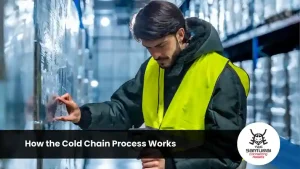
To truly appreciate the complexity of this industry, one must follow a product through its entire lifecycle. It is helpful to think of this journey as a relay race where the “baton” is the temperature-sensitive cargo. Each time the product moves, there is a risk of a hand-off error. Therefore, a meticulously planned step-by-step process is the only way to ensure the goods arrive in pristine condition.
Step 1: Pre-Cooling and Preparation
The process begins long before the product even touches a truck. Specifically, most goods must undergo “pre-cooling.” For example, if berries are picked in a field, they still hold “field heat.” If you put warm berries directly into a refrigerated truck, the truck’s cooling unit will struggle to lower the temperature of the fruit itself. Instead, the producer uses blast chillers or vacuum cooling to bring the product to its target temperature immediately after harvest. By doing so, they preserve the internal structure of the item from the very start.
Step 2: Strategic Loading and Dispatch
Once the product is stabilized, it moves to the loading dock. During this stage, timing is everything. To minimize exposure to ambient air, workers often use “thermal curtains” or “dock seals.” Furthermore, the way the cargo is stacked inside the reefer is critical. As mentioned earlier, air must be able to flow in a “T-floor” pattern under the pallets and up through the back. If the load is blocked, the cooling becomes uneven, leading to the “broken chain” we discussed in Section 2.
Step 3: Real-Time Transit Monitoring
As the vehicle moves toward its destination, the fourth pillar monitoring takes center stage. Thanks to modern telemetry, a logistics manager sitting in an office hundreds of miles away can see exactly what is happening inside the container. In fact, if a driver accidentally turns off the cooling unit to save fuel, the system can trigger an automatic “geofence” alert. Consequently, the manager can contact the driver immediately to rectify the situation, effectively saving the shipment in real-time.
Step 4: The Distribution Center (DC) Hub
Rarely does a shipment go directly from the farm to the store. Instead, it usually stops at a specialized cold distribution center. At this point, the cargo is often “cross-docked.” This means it is moved from a large long-haul trailer to several smaller local delivery vans. During this transition, the environment must be strictly controlled; the loading bays at these hubs are themselves refrigerated to ensure the product never “sweats.”
Step 5: The Last Mile Delivery
Finally, we reach the most challenging part of the journey: the “Last Mile.” This refers to the final movement of the product to the retail shelf or the customer’s doorstep. This stage is particularly risky because delivery vans make frequent stops, opening their doors and letting in warm air each time. To combat this, many companies now use “multi-temp” vehicles that have different compartments for frozen and chilled goods, along with high-tech insulated boxes that can maintain temperature for up to 48 hours without a power source.
Also Read: High Value Inventory Management for Enterprise
Beyond the Grocery Aisle: Vital Industries Driving Cold Chain Demand
While most people immediately think of the frozen food section when they hear the term “cold chain,” the reality is far more expansive. In fact, the global cold chain logistics market valued at approximately $385 billion in 2025 and projected to grow rapidly supports a diverse array of sectors. From life-saving medicines to delicate luxury goods, these industries rely on thermal precision to protect their bottom line and, in many cases, public safety.
1. The Pharmaceutical and Healthcare Sector
Arguably, the most critical user of cold chain technology is the pharmaceutical industry. Unlike a slightly wilted lettuce, a “warm” vaccine can be a matter of life and death.
- Biologics and Vaccines: Many modern medicines are “biologics,” meaning they are derived from living organisms. Because these are protein-based, they are highly sensitive to heat.
- Clinical Trials: Research labs often ship human tissue samples or experimental drugs that require ultra-low temperatures (sometimes as low as -80°C). Furthermore, with the rise of personalized medicine and gene therapies, the demand for specialized “ultra-cold” logistics is at an all-time high. Consequently, this sector is expected to see the fastest growth rate through 2026.
2. The Global Floral Industry
It might come as a surprise, but the flower on your desk likely traveled further than the fruit in your bowl. Because cut flowers are living organisms, they continue to “breathe” after being harvested. To prevent premature wilting, flowers are kept in a “chilled” state (1°C to 2°C) from the moment they are cut in places like Kenya, Colombia, or the Netherlands. Research shows that even a small break in the cold chain can reduce a flower’s “vase life” by up to 20%. Therefore, for florists, the cold chain isn’t just about storage; it’s about ensuring the customer receives a product that lasts more than two days.
3. Specialty Chemicals and Industrial Materials
Another vital, yet often overlooked, sector is the chemical industry. Many industrial materials are chemically unstable at room temperature.
- Adhesives and Resins: High-performance glues used in aerospace or automotive manufacturing can harden prematurely if they get too warm.
- Semiconductor Materials: The precision chemicals used to etch computer chips require incredibly strict climate control to maintain their purity. In these cases, a temperature excursion doesn’t just spoil the product; it can create a hazardous situation or cause a multi-million dollar factory shutdown.
FAQ
What is the most common cause of cold chain failure?
The most frequent culprit is human error, particularly during the loading and unloading phases. Whether it’s leaving a warehouse door open for too long or failing to pre-cool a container, these small lapses in protocol allow ambient heat to seep in, breaking the thermal chain.
How long can a product survive if the cold chain is broken?
This depends entirely on the “thermal mass” of the product and the ambient temperature. While a large pallet of frozen meat might resist thawing for a few hours, a small vial of vaccine can lose its potency in as little as 15 minutes if exposed to direct sunlight or high heat.
Is “Cold Chain” the same as “Chilled Shipping”?
Not exactly. Chilled shipping is just one type of cold chain. The “Cold Chain” is the overarching infrastructure that includes everything from deep-freezing (-30°C) to controlled room temperatures (25°C). Chilled shipping specifically refers to the 2°C to 8°C range.
Conclusion
Navigating the complexities of cold chain logistics requires more than just high-end refrigerators; it demands a seamless integration of technology, specialized hardware, and rigorous human discipline. As global demand for fresh food and biological medicine continues to soar, the ability to maintain thermal integrity from “farm to fork” or “lab to patient” has become a definitive competitive advantage. By mastering the five pillars of the cold chain and utilizing real-time monitoring, businesses can significantly reduce waste, ensure regulatory compliance, and protect the safety of their end consumers.
In an industry where every degree matters, having total visibility over your assets is the key to preventing a logistical meltdown. TAG Samurai Inventory Management offers the professional-grade tools you need to track, manage, and optimize your high-value assets across the entire supply chain. Are you ready to bring world-class precision to your operations? Explore how TAG Samurai can streamline your inventory today!


- Inventory Source and Its Impact on Profitability - 26/03/2026
- What Is Upkeeping? A Complete Business Guide - 20/03/2026
- How Low Maintenance Systems Improve Efficiency - 14/03/2026

